
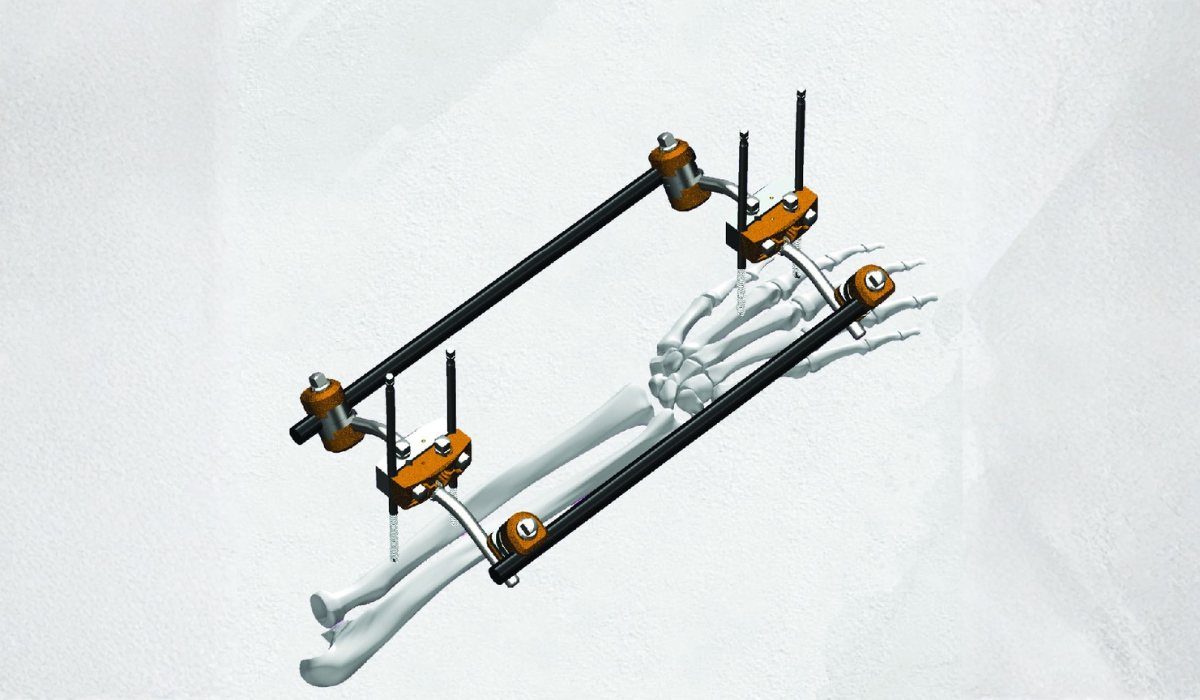
External fixation plays a vital role in modern orthopaedic trauma care. An external fixator stabilizes fractured bones by placing pins or screws into the bone and connecting them to a rigid frame outside the body. This approach allows surgeons to stabilize fractures while protecting surrounding soft tissues and maintaining access to wounds. Because of these advantages, external fixation systems remain widely used in trauma management, limb reconstruction, and deformity correction procedures.
Like any orthopaedic technique, however, external fixation can present certain challenges during treatment, including pin tract infections, frame instability, and mechanical issues within the fixation system. Over the years, advances in orthopedic implants and modular fixation technology have helped address many of these concerns. In this article, we will explore the most common complications associated with external fixation and how modern orthopedic fixation systems are designed to reduce these risks and improve patient outcomes.
Understanding How External Fixators Work
An external fixator stabilizes bone fragments by using pins or screws that are inserted through the skin and into the bone. These pins are then connected to rods and clamps that form a rigid external frame. The frame holds the bone in proper alignment while healing occurs.
The fundamental components of most external fixation systems include:
- Bone screws or Schanz pins
- Connecting rods
- Clamps and couplings
- Frame structures or ring assemblies
Modern systems are typically designed as modular fixator systems. In non-modular systems, the frame structure is typically pre-defined, offering limited flexibility once applied. In contrast, modular fixator systems use interchangeable components that allow surgeons to assemble and adjust the frame according to the fracture pattern, anatomical location, and stability requirements.
Different types of external fixators may be used depending on the clinical requirement, including compact trauma frames, joint-specific stabilization systems, and circular ring assemblies used in deformity correction. This modular approach provides greater surgical flexibility and improved mechanical stability.
Pin Tract Infections: The Most Common External Fixator Complication
Among all external fixator complications, pin tract infection is the most frequently encountered. Since fixation pins pass through the skin and into the bone, the surrounding tissue can become irritated or infected if proper care is not maintained.
Causes of Pin Tract Infection
Several factors may contribute to infection at the pin site, including:
- Movement of the skin around the pin
- Poor pin insertion technique
- Bacterial contamination during surgery
- Inadequate pin site hygiene during recovery
Symptoms of a pin tract infection typically include redness, swelling, discharge, or tenderness around the pin site. In more severe cases, the infection may spread deeper toward the bone.
How Modern Fixation Systems Reduce Infection Risk
Modern orthopedic implants used in external fixation systems are designed to improve pin stability and reduce irritation at the insertion site. Improved thread geometry and precision manufacturing allow bone screws to anchor more securely within the bone, reducing micro-movement that can lead to tissue irritation.
Advanced systems also incorporate high-quality materials and carefully engineered pins that distribute mechanical load more evenly. In addition, better surgical instrumentation helps surgeons insert pins more accurately and efficiently.
These improvements, combined with proper pin care protocols, have significantly reduced infection rates associated with external fixation.
Frame Instability and Loss of Fixation
Frame instability is another complication that can affect fracture healing. If the external fixation frame does not maintain sufficient rigidity, the bone fragments may shift out of alignment, potentially delaying healing.
Causes of Frame Instability
Frame instability can occur for several reasons:
- Improper frame configuration
- Insufficient rod stiffness
- Loosening of clamps or connectors
- Inadequate distribution of mechanical forces
In early external fixation systems, frame stability sometimes depended heavily on the surgeon’s assembly technique. Modern external fixator types, however, incorporate improved mechanical design and modular components that enhance frame rigidity.
Modular Fixator Systems Improve Stability
Many modern trauma systems use modular fixator configurations that allow surgeons to customize frame structures during surgery. Components such as pin-to-rod couplings, rod-to-rod connectors, and double pin clamps enable surgeons to build stronger frames with better load distribution.
For example, modular connectors allow additional rods to be added when greater stability is required. Multi-hole pin clamps enable surgeons to anchor multiple pins in the same segment of bone, further strengthening the frame.
These systems also help create compact frame structures, which improve stability while minimizing the bulk of the external device.
Soft Tissue Irritation and Patient Discomfort
External fixation frames extend outside the body and remain in place for several weeks or months. During this period, some patients may experience soft tissue irritation or discomfort around the fixation area.
Causes of Soft Tissue Irritation
Several factors can contribute to soft tissue irritation, including:
- Bulky frame structures that press against surrounding tissues
- Improper pin placement near muscles or tendons
- Skin tension caused by pin movement
- Difficulty maintaining hygiene around the frame
Reducing frame bulk and improving ergonomics have become important priorities in the design of modern orthopedic fixation systems.
Design Improvements that Improve Patient Comfort
Newer fixation systems emphasize compact frame construction and simplified structural design. By minimizing unnecessary components, modern frames occupy less space and interfere less with patient movement.
Many systems also require fewer tools during assembly, allowing surgeons to construct stable frames quickly during surgery. This efficiency not only reduces operation time but also improves frame consistency and reliability.
Because of these improvements, modern external fixation systems are generally easier for both surgeons and patients to manage throughout the treatment process.
Mechanical Complications in External Fixation Systems
Mechanical issues such as pin loosening, rod bending, or clamp slippage can occasionally occur during external fixation treatment. These complications may reduce frame stability and require adjustments during follow-up visits.
Common Mechanical Issues
Some mechanical problems associated with external fixation include:
- Loosening of bone screws
- Bending of connecting rods
- Slippage of clamps or couplings
- Misalignment of frame components
While these issues are relatively uncommon in modern systems, they remain important considerations in orthopaedic trauma care.
Engineering Advances in Modern Orthopedic Implants
Modern orthopedic implants used in external fixation systems are manufactured using precision engineering and high-strength materials. Improved clamp locking mechanisms help maintain consistent pressure between rods and connectors, reducing the risk of slippage.
Connecting rods are also designed to provide greater mechanical rigidity while remaining lightweight. Advanced manufacturing techniques ensure accurate dimensions and improved structural strength across all system components.
As a result, modern external fixation systems offer more reliable mechanical performance than earlier designs.
The Role of Surgical Technique and Patient Care
Even the most advanced orthopedic fixation systems require proper surgical technique and post-operative care to achieve optimal results.
Key factors that influence successful treatment include:
- Accurate pin placement during surgery
- Appropriate frame configuration for the fracture pattern
- Regular monitoring of frame stability
- Proper pin site hygiene during recovery
Surgeons must carefully evaluate fracture type, bone quality, and surrounding soft tissue conditions before selecting the appropriate external fixator system. When used correctly, modern systems provide reliable fracture stabilization with minimal complications.
Continuous Innovation in External Fixation Technology
The field of orthopaedic trauma continues to evolve as manufacturers develop new technologies and improved implant designs. Innovations in modular fixator systems have made external fixation more adaptable, efficient, and surgeon-friendly.
Modern systems emphasize:
- Simplified structural design for faster assembly
- Reduced instrumentation requirements
- Compact frame configurations
- Improved stability through advanced coupling mechanisms
These advancements give surgeons greater flexibility when treating complex fractures while maintaining high standards of patient safety.
Conclusion
External fixation remains an important technique in orthopaedic trauma care. While external fixator complications such as pin tract infections, frame instability, and soft tissue irritation can occur, advances in orthopedic implants and modern external fixator systems have improved treatment outcomes and surgical efficiency.
At Madison Ortho, we develop reliable orthopedic fixation systems designed to support surgeons with stable, modular external fixation solutions across a range of clinical applications. Our portfolio includes systems such as Asteria, an integral external fixator system, and Nikes, a modular external fixator system, designed to address different indications and anatomical requirements. To learn more about our external fixator products, call +1-787-945-5800 or email info@madisonorthoinc.com and our team will assist you.
