
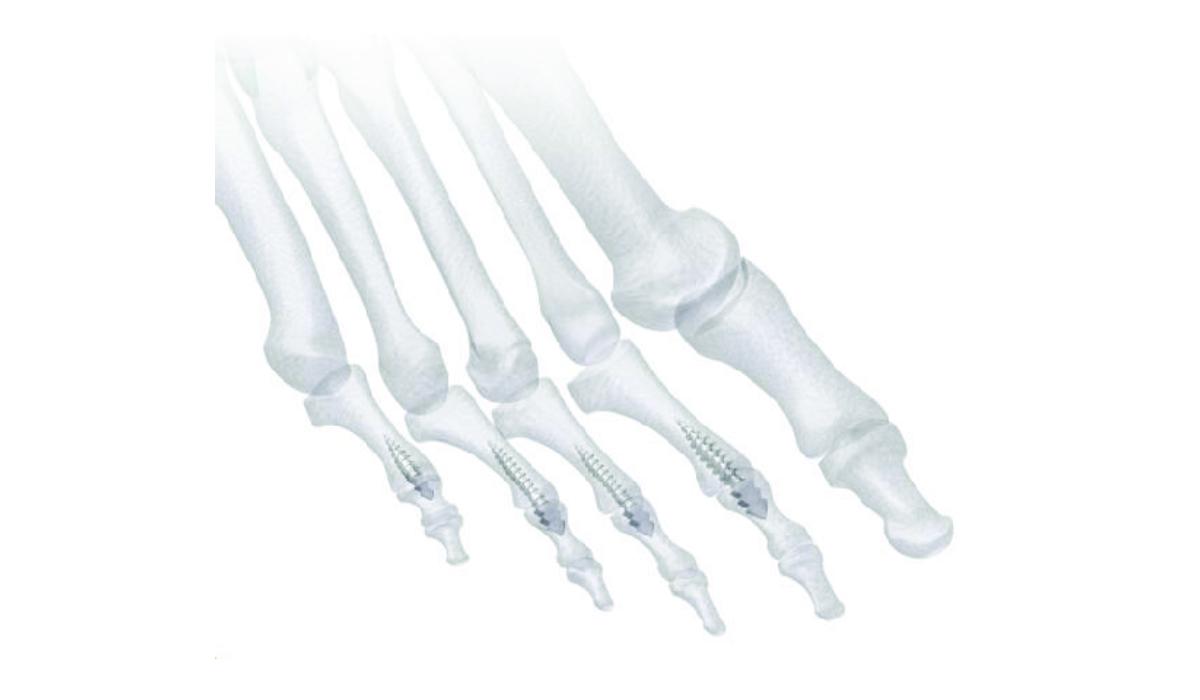
Successful bone healing depends on stability, alignment, and controlled compression across fracture or fusion sites. Orthopedic implants play a critical role in achieving this balance by maintaining structural integrity while the body performs the biological work of healing. Among the most commonly used fixation solutions are orthopedic screws and compression staples, two approaches designed to solve similar challenges through different mechanical principles. Understanding how orthopedic screws, such as cannulated screws or headless compression screws, and compression staples function helps surgeons, distributors, and procurement teams make informed decisions when selecting implant systems. This article explores how these fixation solutions work, where each is most effective, and how thoughtful implant design supports predictable outcomes while highlighting how Madison Ortho delivers reliability across its orthopedic implant portfolio.
The Core Principles Behind Orthopedic Fixation
All orthopedic implants are designed around a few foundational principles. Regardless of form, fixation devices must stabilize bone segments, maintain alignment, and manage forces generated during movement and weight bearing.
Two important mechanical concepts guide implant selection:
- Load sharing, where the implant works with the bone to distribute forces
- Load bearing, where the implant temporarily carries most of the mechanical stress
Equally important is the concept of controlled compression. Compression encourages bone contact, reduces gaps at fracture or fusion sites, and supports primary bone healing. At the same time, implants must resist rotational, axial, and shear forces without over-restricting physiological micromotion.
Orthopedic screws and compression staples approach these challenges differently, offering complementary solutions rather than interchangeable ones.
How Orthopedic Screws Achieve Fixation
Orthopedic screws are among the most versatile orthopedic implants used in trauma, reconstruction, and foot and ankle procedures. Their effectiveness lies in how threads engage bone and translate rotational torque into compression.
Thread Engagement and Stability
Orthopedic screws anchor into bone through precisely engineered threads. The relationship between thread pitch, depth, and core diameter determines holding strength and resistance to pull-out. These parameters vary based on bone quality and anatomical location.
- Cortical engagement provides strong fixation in dense bone
- Cancellous engagement supports fixation in spongy bone near joints
Compression Through Screw Design
Compression is achieved either through surgical technique or through screw geometry itself. Partially threaded screws can act as lag screws, drawing bone fragments together. Advanced designs, such as the headless compression screw, generate compression through differential thread pitch without relying on a protruding head.
Cannulated Screws: Precision Matters
Cannulated screws allow insertion over a guide wire, enabling precise placement along a planned trajectory. This design supports minimally invasive techniques, reduces soft tissue disruption, and improves accuracy in small bones and peri-articular regions.
Cannulated screws are especially valuable when precision is critical, such as in foot, ankle, and hand procedures.
Headless Compression Screws: Compression Without Prominence
The headless compression screw addresses a common challenge in orthopedic fixation: achieving compression without leaving hardware that protrudes beyond the bone surface.
By using different thread pitches at each end, headless compression screws, like Madison Ortho’s PROTEA, generate interfragmentary compression as the screw advances. Because the head is buried beneath the bone surface, the implant minimizes irritation to surrounding soft tissue and reduces the likelihood of secondary removal procedures.
Headless compression screws are commonly used in:
- Small bone fixation
- Intra-articular applications
- Foot and ankle procedures
- Hand and wrist surgeries
Their low-profile nature makes them especially suitable for anatomically constrained areas where patient comfort and implant discretion matter.
Hammertoe Screws: Specialized Fixation for Digital Alignment
Hammertoe screws are a specialized category of orthopedic screws designed for digital correction and toe fusion procedures. These implants must balance stability, compression, and minimal profile within a very small anatomical footprint.
Hammertoe screws are engineered to:
- Maintain toe alignment during fusion
- Provide sufficient compression across small joints
- Minimize implant prominence
- Support minimally invasive surgical approaches
Because toe anatomy leaves little margin for error, precision manufacturing and consistent thread geometry are essential. High-quality hammertoe screws contribute to predictable alignment and reduced complication rates.
How Compression Staples Achieve Fixation
Compression staples, like Madison Ortho’s DAHLIA, represent a different fixation philosophy. Instead of threading into bone, staples span across an osteotomy or fusion site and apply compressive force through their geometry and material behavior.
Continuous Compression Over Time
Unlike screws, which typically deliver static compression at insertion, compression staples are designed to maintain compressive force as bone settles during healing. This dynamic behavior helps preserve bone contact even as minor resorption or remodeling occurs.
Mechanical and Shape-Memory Designs
Some compression staples rely purely on mechanical deformation, while others use shape-memory alloys that apply force as they return to their original configuration. Both approaches aim to deliver stable, sustained compression without bulky hardware.
Low-Profile Fixation
Compression staples sit flush against the bone surface and distribute force across multiple fixation points. This makes them particularly useful in areas with limited space or thin soft-tissue coverage.
Anatomical Scope of Compression Staples
Compression staples are not limited to the foot and ankle, although these regions remain their most established and widely adopted applications. Their role varies by region and is influenced by local biomechanics, soft-tissue tolerance, and load demands.
Compression staples are used in:
- Foot and ankle, including midfoot and hindfoot fusions, osteotomies, and corrective forefoot procedures
- Hand and wrist, for selected small-joint arthrodeses and osteotomies where implant prominence must be minimised
- Pediatric orthopedics, primarily for guided growth and temporary hemiepiphysiodesis rather than permanent fixation
- Other regions, in limited or adjunct roles, where compression is required without bulk, though higher-load areas typically favour screw-based systems
Key Mechanical Differences: Screws vs. Staples
While both fixation methods support bone healing, their mechanical behavior differs in meaningful ways.
Orthopedic screws:
- Deliver compression along a single axis
- Provide strong resistance to rotational forces
- Offer directional control and adaptability
- Are highly versatile across indications
Compression staples:
- Apply compression across a broader surface area
- Maintain force dynamically as healing progresses
- Reduce hardware prominence
- Simplify fixation in select fusion and osteotomy procedures
Rather than replacing screws, staples expand the fixation toolkit, allowing surgeons to match implant mechanics to anatomical and procedural needs.
Anatomical and Application-Based Considerations
The choice between orthopedic screws and compression staples often depends on anatomy and procedural goals.
- Small bones and joints may benefit from headless compression screws or compression staples
- Areas requiring rotational control often favor screws
- Fusion procedures may leverage the continuous compression of staples
- Thin soft-tissue regions demand low-profile implant solutions
Understanding these variables helps ensure fixation strategies align with both mechanical demands and patient comfort.
Material Science and Implant Performance
Material selection plays a significant role in implant performance. Modern orthopedic implants are commonly manufactured from titanium alloys or stainless steel, each offering distinct advantages.
- Titanium alloys provide excellent biocompatibility, corrosion resistance, and elasticity closer to bone
- Stainless steel offers high strength and cost efficiency
Madison Ortho carefully evaluates material properties to ensure implants meet mechanical demands while maintaining long-term reliability in vivo.
Manufacturing Precision and Quality Standards
The effectiveness of orthopedic screws and compression staples depends heavily on manufacturing accuracy. Even minor deviations in thread geometry or surface finish can affect fixation strength and insertion performance.
Key quality considerations include:
- Tight dimensional tolerances
- Consistent thread profiles
- Controlled surface finishing
- Rigorous mechanical testing
Madison Ortho’s orthopedic implants, whether it is Herbert Cannulated Screw like GHATS or Hammertoe Screws like URANUS, are manufactured with a focus on repeatability, durability, and compliance with global regulatory standards, helping distributors and healthcare providers trust performance across procedures.
How Implant Selection Impacts Long-Term Outcomes
Orthopedic implants are temporary tools with permanent implications. Choosing the right fixation method reduces complications, supports healing timelines, and improves overall surgical efficiency.
By offering a comprehensive range of orthopedic screws and compression staples, Madison Ortho supports diverse clinical needs without forcing compromise between stability and adaptability.
Conclusion: Two Fixation Strategies, One Trusted Source
Orthopedic screws and compression staples each play a vital role in modern fixation strategies. When selected thoughtfully, they complement anatomical requirements, support bone healing, and contribute to predictable outcomes.
For surgeons, distributors, and procurement teams seeking reliable orthopedic implants backed by precision manufacturing and thoughtful design, Madison Ortho delivers solutions that balance engineering excellence with practical application. Whether the need is precisely guided fixation, low-profile compression, or specialized digital alignment, Madison Ortho’s implant systems are designed to perform where it matters most. To explore our full range of orthopedic screws and staples or enquire about distribution opportunities, connect with us at info@madisonorthoinc.com or call +1-787-945-5800.
