
Key Takeaways
- Pelvic and acetabular fractures present unique fixation challenges due to complex anatomy, variable fracture patterns, and limited surgical access.
- Pre-contoured pelvic plates are designed to correspond more closely to commonly encountered pelvic and acetabular surfaces, reducing the need for extensive intraoperative contouring.
- Improved implant adaptation can support more predictable plate positioning and help surgeons execute planned fixation strategies.
- Anatomically informed plate designs can be particularly valuable when managing complex fracture configurations involving multiple fragments and anatomical planes.
- When evaluating a pelvic plating system, important considerations include anatomical plate design, fixation versatility, screw placement options, implant material, manufacturing quality, and supporting instrumentation.
- Madison Ortho's pelvic plating solutions incorporate anatomical pre-molded designs, locking and non-locking fixation options, titanium alloy construction, and dedicated instrumentation to support modern pelvic reconstruction procedures.
Pelvic and acetabular fractures present some of the most demanding fixation challenges in orthopedic trauma surgery. Fracture complexity, irregular pelvic geometry, and limited surgical corridors often make achieving accurate implant adaptation difficult, particularly when conventional plates require extensive intraoperative contouring. While plate modification remains an established aspect of pelvic reconstruction, repeated bending and adjustment can add procedural complexity and influence implant positioning.
To address these challenges, Madison Ortho offers pre-contoured pelvic plating systems engineered around commonly encountered pelvic and acetabular anatomical pathways. These implants are designed to reduce contouring requirements, support more predictable plate adaptation, and accommodate the anatomical demands of complex fracture reconstruction. In this article, we’ll examine how pre-contoured pelvic plates help address the challenges associated with complex pelvic fractures.
What are Pre-Contoured Pelvic Plates?
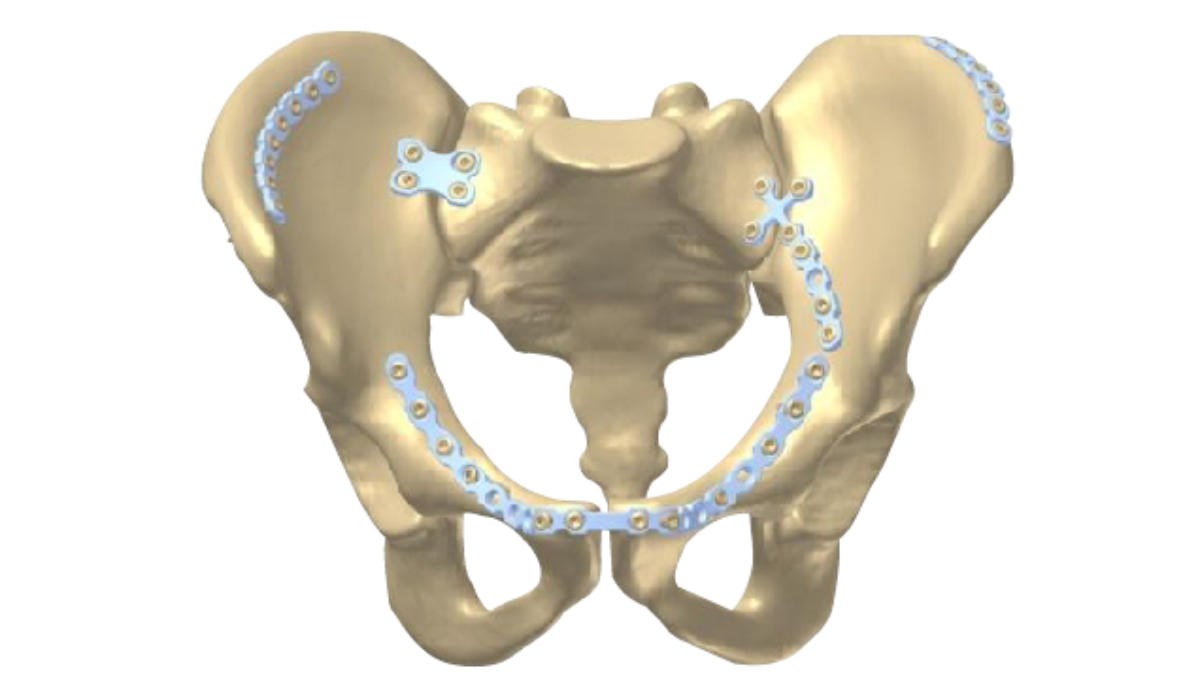
Pre-contoured pelvic plates are fixation devices with anatomically shaped profiles designed to correspond to commonly encountered pelvic and acetabular surfaces. Compared with conventional straight plates, such as dynamic compression plates, these implants are engineered with anatomically contoured geometries that may reduce the extent of intraoperative bending required to achieve appropriate adaptation to specific pelvic regions.
Pre-contoured pelvic plates are available in configurations designed for different anatomical locations and fracture patterns, allowing their use across a range of pelvic and acetabular fixation procedures. Their development reflects the growing emphasis on anatomically informed implant design, with plate geometries engineered to accommodate the structural complexity of the pelvis and support modern fracture fixation strategies.
How Pre-Contoured Pelvic Plates Help Address Complex Fracture Fixation
The effectiveness of pelvic fracture fixation depends not only on surgical technique but also on how well the implant adapts to the anatomical and biomechanical demands of the reconstruction. Given the irregular geometry of the pelvis and the diversity of fracture patterns encountered in clinical practice, implant conformity remains an important consideration during fixation planning. Our pre-contoured pelvic plates are designed to address these challenges through anatomically informed geometries that support implant adaptation, fixation strategy, and procedural efficiency.
Improved Anatomical Adaptation
One of the primary advantages of pre-contoured pelvic plates is their ability to more closely correspond to commonly encountered pelvic and acetabular surfaces. Because these implants are designed around specific anatomical regions, they may provide a closer initial fit than conventional plates that require extensive contouring. Improved anatomical adaptation can help surgeons position implants along intended fixation pathways while accommodating the complex three-dimensional structure of the pelvis.
Read Also: A Guide to Types of Orthopedic Implants and Their Uses
Reduced Intraoperative Contouring Requirements
Traditional pelvic fixation often requires significant plate modification to achieve appropriate conformity to the underlying anatomy. Depending on the fracture pattern and implant location, this process may involve multiple adjustments during surgery. Pre-contoured plate designs are intended to reduce the extent of intraoperative bending required, allowing surgeons to spend less time adapting the implant and more time focusing on fracture reduction and fixation objectives.
More Predictable Plate Positioning
Consistent implant geometry can contribute to more predictable plate placement across similar anatomical regions. Because pre-contoured plates are designed with predefined anatomical profiles, they provide a standardized starting point for fixation. This may help support implant positioning strategies developed during preoperative planning while reducing variability associated with extensive manual contouring.
Support for Complex Fracture Patterns
Complex pelvic and acetabular fractures frequently involve multiple fragments, irregular fracture lines, and fixation across different anatomical planes. In these situations, implant adaptability becomes particularly important. Pre-contoured pelvic plates are designed to accommodate the anatomical characteristics of specific pelvic regions, making them a valuable option in fixation strategies that require stable reconstruction across challenging fracture configurations.
Key Features to Evaluate in a Pre-Contoured Pelvic Plate System
While pre-contoured pelvic plates are designed to address many of the anatomical challenges associated with pelvic fracture fixation, implant systems can differ significantly in their design characteristics and capabilities. Evaluating key features can help surgeons select a system that aligns with procedural requirements and fixation objectives. At Madison Ortho, our pelvic plating solutions are developed with a focus on anatomical adaptation, fixation versatility, and procedural efficiency to support the demands of complex pelvic reconstruction.
- Anatomical Plate Design: The effectiveness of a pre-contoured plate depends largely on how well its geometry corresponds to the intended anatomical region. Our pelvic plates incorporate anatomical pre-molded designs developed around commonly encountered pelvic and acetabular pathways, helping support implant adaptation while reducing the extent of intraoperative modification required. Region-specific plate configurations further accommodate different anatomical locations and fracture patterns.
- Locking and Non-Locking Fixation Options: Fixation requirements can vary considerably depending on fracture characteristics, bone quality, and surgical objectives. To provide greater flexibility, our pelvic plating systems support both locking and non-locking screw configurations, allowing surgeons to tailor construct design according to procedural needs while maintaining versatility across different clinical applications.
- Screw Placement Versatility: Pelvic fractures often require fixation across complex anatomical regions and multiple fracture planes. Our plate designs incorporate multiple screw placement options to support diverse fixation strategies and accommodate varying fracture configurations. This flexibility can assist surgeons when managing challenging pelvic and acetabular reconstructions.
- Implant Material and Manufacturing Quality: Material selection and manufacturing consistency are important considerations in implant performance. Our pelvic plates are manufactured from titanium alloy and produced with precise dimensional tolerances to support reliability across different plate configurations. Combined with consistent production standards, these characteristics contribute to predictable implant performance and surgical planning.
- Instrumentation and Surgical Workflow: Dedicated instrumentation can play an important role in implant handling and procedural efficiency. Our pelvic plating systems are supported by specialized reduction instruments, retractors, forceps, and fixation tools designed for pelvic and acetabular procedures. This comprehensive instrumentation helps facilitate fracture reduction, implant placement, and overall workflow during complex reconstructions.
Explore Madison Ortho's Pelvic Plating Solutions
At Madison Ortho, we are committed to providing high-quality orthopedic implant solutions, including pelvic plates designed to support precision in complex fracture fixation. Our systems incorporate anatomically pre-molded designs, locking and non-locking fixation options, titanium alloy and Stainless steel construction, and dedicated instrumentation to meet the demands of modern pelvic reconstruction procedures.
Explore our portfolio of pelvic plates and other locking plate solutions designed to support a wide range of orthopedic fixation needs. To discuss your specific requirements, contact us at +1-787-945-5800 or email info@madisonorthoinc.com. We look forward to supporting your orthopedic fixation needs with solutions engineered for performance, reliability, and surgical versatility.
